

A sewage treatment plant (STP) is type-tested and approved based on its designed influent hydraulic and organic loadings (expressed in m3/day and kg BOD/day). The actual influent to a sewage treatment plant onboard depends on various factors, including the number of persons on board (POB), influent types (black water, grey water, conditioning water), ship type, operational pattern, the presence of buffer tanks, and the STP feed system, among others. Picking a sewage treatment plant with given capacities to suit ship-specific influent loading conditions can be both crucial and challenging. Before we dive into the details, here is the good news: HAMANN’s team of sewage treatment experts is available to provide in-depth consultation and advice to shipyards, shipowners, operators, designers, and other decision-makers.
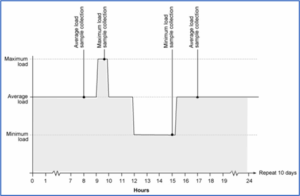
Figure 1: STP type test loading profile (taken from the MEPC guideline)
SEWAGE TREATMENT PLANT TYPE TESTS ON LAND
A sewage treatment plant is type-tested over 10 days, following a 24-hour loading profile (see figure 1). The Y-axis can represent the influent hydraulic loading in m³/hr, or organic loading in kg BOD/hr given a fixed sewage BOD concentration. The shaded area represents the total average influent loadings in a day. The average hourly loading is calculated by dividing the total by 24 (note the discrepancy in the graph that needs correction). Such a daily profile is often delivered by a variable-speed progressive displacement (PD) pump, which often falls outside the scope of the sewage treatment plant.
A sewage treatment plant can be designed to handle an STP-specific peak load and have it tested for a given period. A sewage treatment plant can also be designed to handle an even load with no peaks, allowing it to perform more stably and efficiently. A type test on land can ensure the challenging sewage influent matches the STP’s designed loadings, with or without peaks.
SELECTING A SEWAGE TREATMENT PLANT FOR A SHIP

Table 1: Black & greywater per capita (taken from ISO 15749-1:2004)
A ship’s maximum number of persons on board (POB) and chosen influent types need to be converted to m3/day and kg BOD/day for picking a sewage treatment plant, using the per capita loading rates in litres per person/day and grams BOD/person/day. However, there is a general lack of quality data supported by independent studies or surveys. There are no published per capita organic loading rates. Bridging a ship’s POB and an STP’s certified capacities assumes some risks. But there are upsides. To cover the risks, the chosen STP often has a certified capacity that is notably greater than the estimated influent loadings. Crucially, the industry can be expected to be incentivised to firm up these per-capita loading rates, and the STPs can be expected to become more robust when sewage regulations are improved and effectively enforced in the future.
Among the uncertainties, some aspects of STP sizing and selection can be certain for shipyards, owners, and manufacturers.
NOTE INVALID SEWAGE TREATMENT PLANTS AND AVOID THEM
Invalid STPs are those lacking proven treatment principles and/or failing to conform to the Guidelines. They are beyond the help of operators (see our article on how to identify “magic boxes” here). For example, STPs without engineering features to separate or produce sewage sludge should be avoided, regardless of how cramped the plant room is or how strong the business incentive for no-sludge STPs (see our article on sewage sludge here). STPs accepting food waste, via the grey water system or not, can violate many laws (see our article on the importance to separate food waste lines from sewage lines here) by making a regulated waste disappear. An STP having grey water connected to its last disinfection stage is sized to bypass grey water from its tested treatment train, a practice discredited by some authorities.
Selecting the right-sized and valid STPs is only the start. They also require the right influent interface to operate in accordance with its approved conditions.
TO HAVE THE RIGHT STP INFLUENT INTERFACE
For example, feeding an STP with vacuum black water with a concentration many times higher than the type-test conditions can result in poor performance that is beyond the help of operators. Introducing grey water or metered conditioning water is essential (see our articles on conditioning water here (part 1) and here (part 2)).
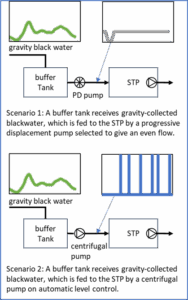
Figure 2: Examples of STP feed configurations
On ships, STPs may not be served by the PD pumps delivering the daily flow profile during type tests on land. They may be fed by centrifugal pumps with an instantaneous flow many magnitudes higher (graph).
A holding tank, or notionally a buffer tank, can create the worst peak conditions like a burst reservoir when its transfer pumps are not properly designed, controlled, or commissioned (Figure 2). STPs tested and approved with hourly peak loads may also provide additional information for achieving a seamless interface. Regardless of whether an STP has certified peak capacities, its ship-specific influent buffering and balancing requirements should be carefully assessed. An STP receiving multiple influent flows or even gravity influent should also have its feed system designed to keep the combined influent loadings within its approved capabilities.
Such ship-specific interface conditions are crucial yet tedious, often falling between stools during a multi-party project. We have incorporated feed pumps and their controls as an integral part of our STPs. We have taken it a step further by advising on mixing tanks and sewage sludge holding tanks (see our article on aerated mixing tanks here). By taking the initiative to work closely with shipyards, owners, and classification societies to resolve STP interface issues, a right-sized sewate treatment plant has a better chance of operating in accordance with its approved conditions.